Water pollution is real, and it's here in Wānaka

Over the past few months (and even well before then) water pollution and water safety issues have reared their ugly head in Wānaka and surrounds. Most recently the Wānaka Sun reported on the presence of human faecal matter in Lake Wānaka, with concern that people are bathing in the lake and nearby waterways.

Concern over local waterway protection related to continuing development and infrastructure has also been raised as possible causes of water pollution in our region. Developers, in conjunction with QLDC for their oversight and approvals of land developments, have an obligation to ensure that the environment is being considered and any pollution risks are mitigated in any development. To find out more about what QLDC is doing about water pollution and environmental protection management in the context of infrastructure and land development, contact Members of the Wānaka-Upper Clutha Community Board: Environment- Linda Joll (+64 21 921 665 or linda.joll@qldc.govt.nz); Economic- Lyal Cocks (+64 27 438 1443 or lyal.cocks@qldc.govt.nz).

If you’re concerned about water quality and safety, you can contact us at info@fobc.kiwi, or contact WAI Wānaka at getinvolved@waiwanaka.nz. You can also report instances of pollution by calling Otago Regional Council on 0800 800 033 or by completing a report online at https://www.orc.govt.nz/environment/report-pollution/

*Find out more about water quality monitoring at https://www.orc.govt.nz/environment/water-care/water-quality/

You can check out the original Wānaka Sun article here: https://digital.thewanakasun.co.nz/html5/default.aspx

Gunning for gunnera part II

Managing the prolific weed Gunnera tinctoria

Part II

Big, big, big gunnera leaves

The removal and management work

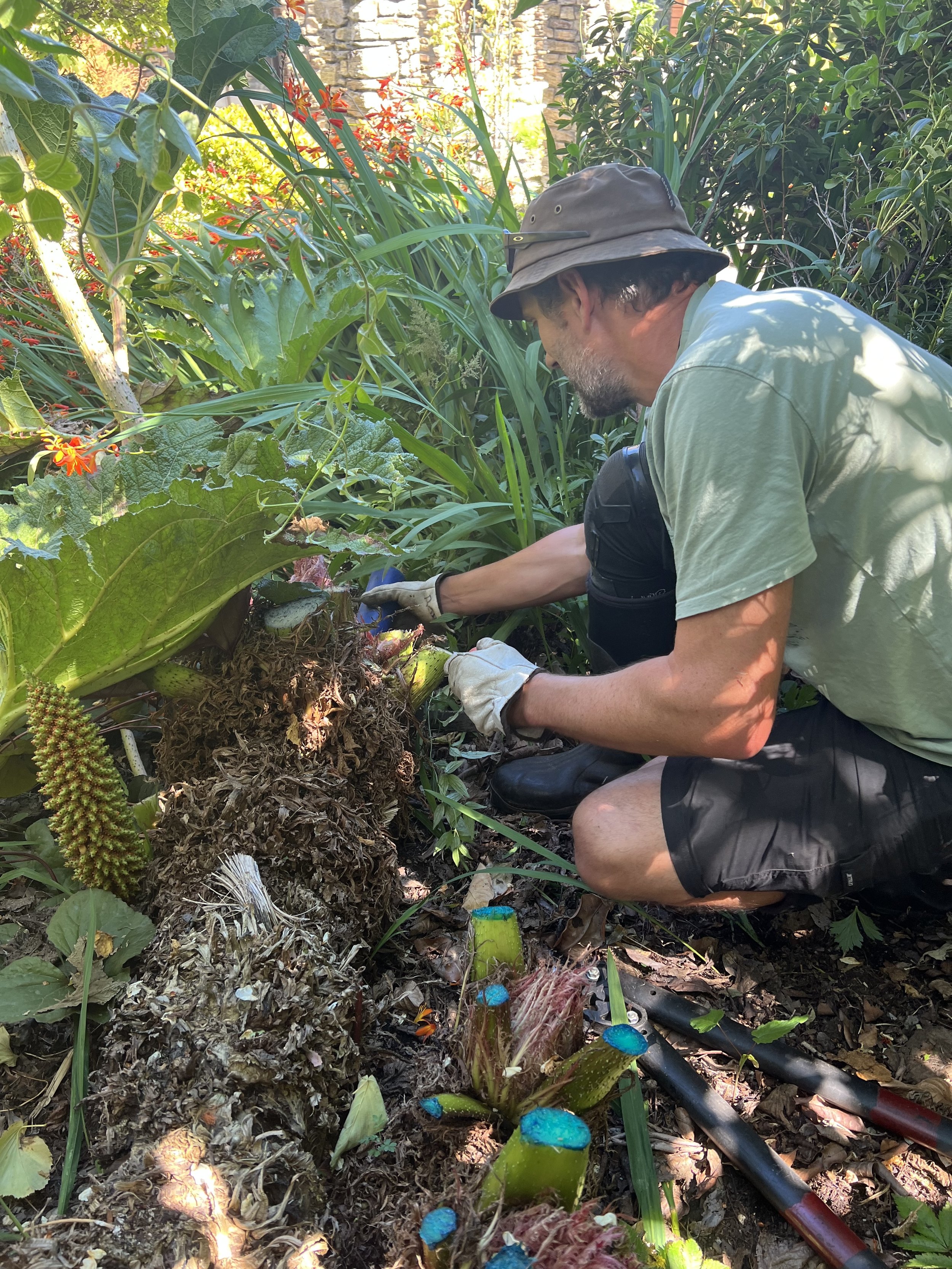
A ‘cut and paste’ method is being used to manage and remove the gunnera found along Bullock Creek and its tributaries. Firstly, the plant stalks are cut down with shears and saw; some of the stalks are more than 15cm in diameter and can weigh at least 7kg or more, depending on how big the leaves are. Secondly, after the stalks have been cut as close to the ground as possible, a herbicide paste is applied directly to the exposed stem, which works to completely kill the plants, spreading through the remaining vascular system. Given that the application of herbicide is being done in the close vicinity of the creek and nearby to other non-target plants, Paul and Ed are very careful to ensure the targeted and judicious use of the herbicide to the gunnera being cut down.

Ed pasting the stumps

This combination of physical and chemical management of gunnera helps to firstly manage existing stands of the plant, whilst also reducing their ability to spread and grow elsewhere. While the cutting and pasting method is effective, it is important to note that even once the plants have been cut down and poisoned, the remaining stumps and root systems can still impact the immediate vicinity and the ability of other plants to repopulate that area. Therefore, it is of critical importance to identify and manage gunnera when it is a smaller plant, to avoid the potential larger-scale problems they can cause as they grow into mature, and very large, plants.

Cutting the last one…a big job

 After being cut down, the stalks and leaves of gunnera are taken to the green waste disposal site where they are then mulched and process to become compost or topsoil. A nice closed loop from foe to friend in the garden.

A trailerful of gunnera, bursting at the seams

What can I do to help?

If you’re a landowner or have responsibility for any creek-side land, you can do your bit by removing gunnera where and when you see it. You can also contact us for more information or for help in the process. For more information about managing gunnera check out this page from ORC: https://www.orc.govt.nz/environment/biosecurity-and-pests/plant-pests/gunnera/

If you love the wetlands and waterways regeneration work we do, you may want to volunteer with us or you may want to make a donation to help continue our work. Check out our website for more information www.fobc.kiwi


With thanks to Paul and Ed, Central Lakes Trust and Wānaka Rotary, and cooperation from local landowners enabling the important weed removal work in the name of ecosystem and waterway health.


References

Environment Southland Regional Council. (n.d.). Chilean rhubarb. https://pesthub.es.govt.nz/?pwsystem=true&pwid=543&sort=alpha


New Zealand Plant Conservation Network. (2025). Gunnera tinctoria.

https://www.nzpcn.org.nz/flora/species/gunnera-tinctoria/


Otago Regional Council. (2025). Gunnera. https://www.orc.govt.nz/environment/biosecurity-and-pests/plant-pests/gunnera/


Gunning for gunnera

Managing the prolific weed Gunnera tinctoria

Part I


Background

Otago Regional Council (ORC) recently GPS-mapped sites along Bullock Creek in Wānaka, identifying eighteen sites where gunnera (Gunnera tinctoria) was found alongside the creek and its tributaries. From these eighteen sites, with funding generously provided by Central Lakes Trust and Wānaka Rotary, Paul and Ed from FOBC have begun gunnera removal, with additional sited identified as needing gunnera removal numbering at least forty.


The removal work began around mid-February and is in conjunction with private landowners who have given permission to access the tributaries running through their land where gunnera is growing. Paul is door-knocking houses based on the eighteen original sites identified by ORC. It is critical to have landowner cooperation with this project, to allow access to first identify and then remove the gunnera from alongside Bullock Creek. One landowner described how they’re happy to be involved because it means the health of the waterways is being looked after.


What is gunnera and why is it a problem?

Gunnera, also known as Chilean rhubarb, is a large growing clump-forming plant, classified as a National Pest Plant Accord (NPPA) plant and a DOC-identified environmental weed[1] in Aotearoa New Zealand.


The plants can grow so big, with some of the larger leaves measuring at least a metre wide or more, which is massive! The shade they create negates ideal light and growing conditions for other plants, essentially out-competing other plants for light and space; Ed says that only some shade-loving species can survive in the midst of gunnera. Because gunnera easily spreads and grows more seedlings through its root system and even from stalk cuttings, it poses a huge competition risk to native plant species that would otherwise grow in similar conditions.

Look how big just one stalk and leaf is compared to Paul!

 “They can take over hectares”, according to Paul, who goes on to explain that “the spores release when its mature”, creating ample opportunity for gunnera to spread.


How does gunnera spread?

Spores from mature plants are dispersed through the waterways, hence why so many are found along Bullock Creek and its tributaries, as well as being spread by birds[2]. The plant is often found in high-rainfall and wet areas, and has even been spotted on West Coast beaches.

Big heavy flower heads full of seeds.

What is involved in gunnera management?

A lot of hard work! It is a physical job removing gunnera, and Paul and Ed have been hard at work attending the eighteen identified sites and the additional sites where gunnera is known to be growing along Bullock Creek and its tributaries. Stay tuned for the next instalment to find out more about the removal and management work as well as ways you can be involved in this waterway health initiative.


References

[1] New Zealand Plant Conservation Network 2025 and Otago Regional Council 2025

[2] Environment Southland Regional Council n.d.

Friendly weeds- weeds as herbs

If you’ve ever been for a walk through the Bullock Creek wetlands, you may have noticed smaller or less obvious introduced species. While the ongoing wetland restoration work primarily focuses on the removal or management of larger species including crack willow and blackberry, look closely and you may just spy some well known, or at least, some commonly found, introduced weeds that are also considered to be edible and medicinal herbs.


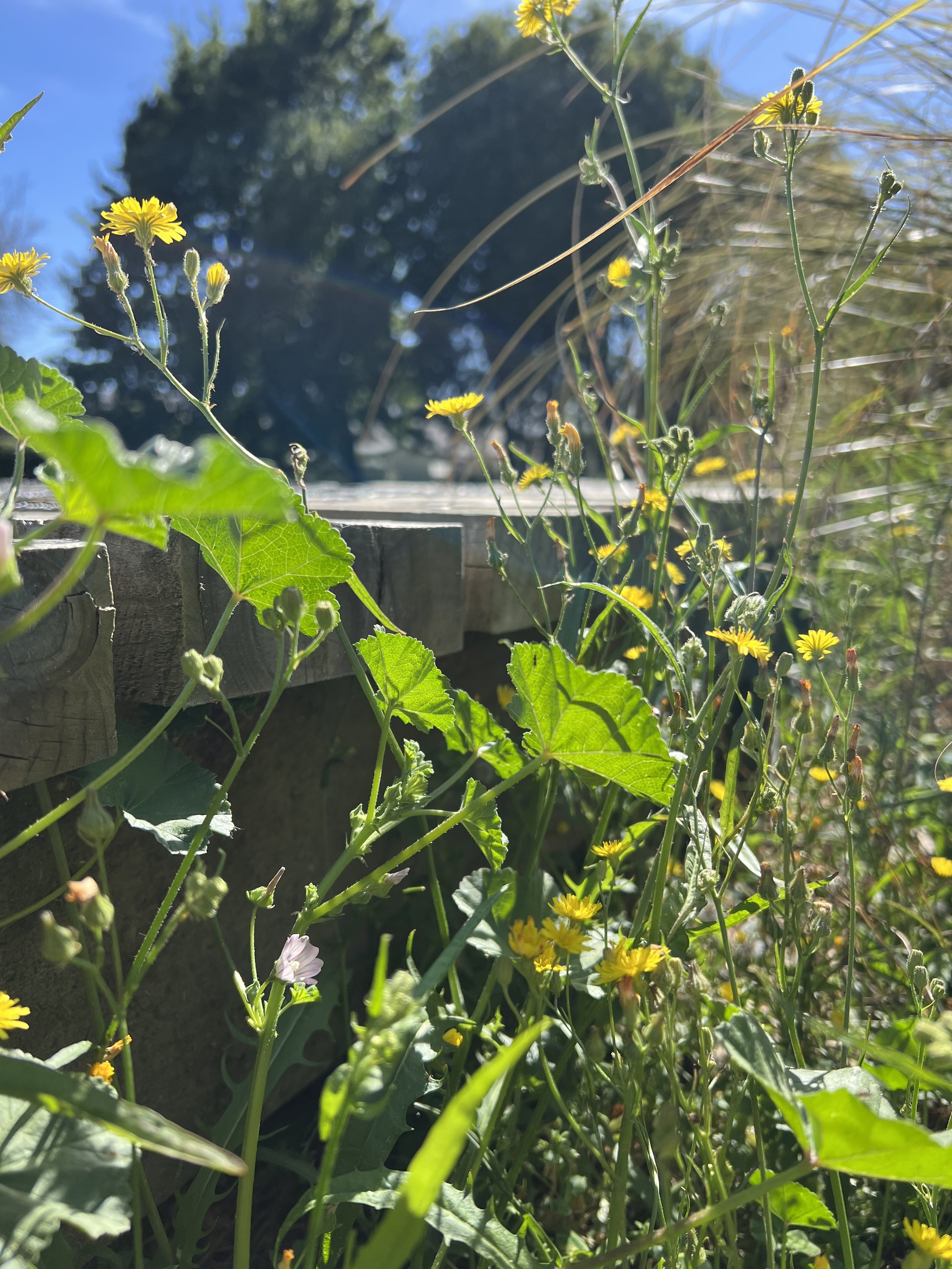
Yarrow (Achillea millefolium), Mullein (Verbascum thapsus), Mint (Mentha spp.), Self heal (Prunella vulgaris), Wild lettuce. (Lactuca spp.), Mallow (Malva spp.), Plantain (Plantago spp.), St John’s Wort (Hypericum Perforatum) and Red clover (Trifolium pratense) are just some of the medicinal herbs to be found around the Bullock Creek site.

Red clover (Trifolium pratense) and Mallow (Malva spp.) Who else is hiding in here?


These herbs arrive at Bullock Creek by way of wind, waterways and pollinators, carrying seeds that end up growing in the prime wetlands soil.


From an ecological perspective, these plants can provide pollen for pollinator species, nectar for insects like bees, and habitat for insects and lizards. When you see them around, you’ll likely notice that they aren’t growing prolifically or causing major ecological concerns within the wetlands.


Even though there is minimal negative ecological of these weeds in the wetland, if you see a weed, pick a weed! Just be careful as you tread through the wetlands that you don’t stand on a native seedling or plant, and be careful to not get your feet stuck in the spongy earth!


Mint is a well known and grown herb and has been used for digestive complaints. Mallow leaves and flowers can be soothing to our skin and internal mucosa. Mullein flowers can be infused in olive oil and used as a remedy for ear aches while the leaves can be useful for some lung complaints. Plantain leaves can be applied to the skin to draw out splinters and the like, and have also been used for soothing the digestive tract. And Self-heal has been used to heal external wounds and as a general tonic when taken internally.


Friendly weeds tea recipe

A few springs of fresh or dried mint leaves

A few fresh or dried mallow leaves and flowers


A cooling and soothing brew…steep the herbs in boiling water in a tea pot for 15 mins. Serve with a dash of honey or as is. Sit in nature and enjoy slowly sipping your foraged herbal tea!

The purple splash of Self heal (Prunella vulgaris)

Always be sure to correctly identify edible and/or medicinal plants before using them, as some herbs can look similar to toxic plants, and be aware when harvesting weeds that you do so in an area that is unlikely to have been treated or exposed to chemicals or pollutants. Always seek professional health advice to make sure herbs are safe for your specific situation before using them. The information provided here is for informational purposes only and is not intended as medical and/or health advice.

FOBC Trust
The Power of Volunteers

Over the years, you may have seen some of the stories we’ve done on the awesome-ness of our volunteers and their impact at the wetlands. And let’s again celebrate and uplift the mahi of volunteers in helping to create and maintain the unique ecosystem and regeneration of the Bullock Creek wetlands.

Importance of volunteering

Volunteering roles are as diverse as the motivations behind volunteering and the benefits that volunteers experience as a direct result of their mahi. According to Volunteering New Zealand[1] volunteers are motivated by factors as varied as social connection, ‘giving back’ to their communities, and seeking to make social connections. As to the benefits that volunteers gain as a result of their volunteering, people talk about a sense of purpose, personal development, the development of friendships, and learning new skills and gaining knowledge[2]. All of this and more can be said to be true of the volunteers we have, and have had, working at Bullock Creek over the years. Not to mention the tangible effects of wetland restoration at Bullock Creek, where a whopping 7,950+ volunteer hours and 10,578 plants have been clocked and planted…WOW! And what does that mean for the environment and its people? Land and water habitat for wetlands species in perpetuity, increased biodiversity, clean water, the cultural significance of taonga species found within the wetlands for Māori, and the development and maintenance of the wetlands as a public amenity[3].

Who are our volunteers at Bullock Creek?

Long-term locals; newer arrivals to town; those passing through as they travel Aotearoa, some of whom may end up staying for a few weeks or months and like to get involved and give back to the community; and everyone in between. Our volunteer base is diverse and everyone brings something unique to their volunteer role, and in turn, gets something out of volunteering, whether that be socialisation, a sense of purpose and meaningful action for the environment, or perhaps being outdoors in the fresh air, getting their hands dirty in the name of ecosystem restoration.

What do our volunteers do?

  • Planting of native species

  • Cardboard layering to suppress weeds around native plantings

  • Mulching

  • Weeding

  • Releasing plant guards as plants grow

  • Stripping cardboard of plastic to ready cardboard for layering

  • Lots of wheelbarrow-ing, tool wielding, digging, chopping, and ripping fun!

  • Oh, and of course, enjoying morning tea after all the mahi!!!

We say THANK YOU, to all of our current and past volunteers, for all your mahi; you are recognised and respected.

Volunteering opportunities

FOBC are just one of many local organisations and agencies working for environmental restoration. Check out some of our partners with volunteer options available for more environmental volunteering opportunities in Wānaka: Te Kākano, WAI Wānaka, and Predator Free Wānaka (formerly Predator Free Wānaka).


Stay tuned for more volunteer news and profiles over the coming months. If you want to get involved in volunteering, come along to our Thursday sessions, currently running 9am-11am. Contact us on Facebook, Instagram or email info@fobc.kiwi for more information.


[1] Volunteering New Zealand. (2024). State of Volunteering in Aotearoa New Zealand 2024. Wellington: Volunteering New Zealand.

[2] Volunteering New Zealand. (2024). State of Volunteering in Aotearoa New Zealand 2024. Wellington: Volunteering New Zealand.

[3] Department of Conservation. (n.d.). Why wetlands are important. https://www.doc.govt.nz/nature/habitats/wetlands/why-wetlands-are-important/


Celebrating the success of World Wetlands Day 2025

What a successful day we had for World Wetlands Day on Sunday 2nd February 2025; we’re still on a high!

The sun was out, the birds were singing, the fish were swimming down the creek and we had at least 300 visitors pass through Bullock Creek! Many visitors took the opportunity to engage with the interactive displays and demonstrations, learning about the Bullock Creek ecosystem and the importance of wetlands and waterways and their conservation, to human and animal health. Demonstrations included fish displays, catching and viewing freshwater macroinvertebrates, learning about reducing the spread of didymo, meeting rabbit-catching ferrets doing their bit for predator control, learning about bees, wandering along the boardwalk to discover the native species plantings, getting to know a bit more about Wānaka history, and much, much more.

Visitors enjoyed a free community BBQ on the lawn and took the opportunity to chat with friends, new and old, and even engage in some fishing line casting fun! Some visitors were neighbours who walk along the boardwalk track daily; some were locals who haven’t visited for awhile and were awestruck by the changes made in ecosystem restoration and invasive species management; one couple who met each other at Bullock Creek decades ago came back to visit together; while others visited from out of town, keen to learn more about the gem that is Bullock Creek. Such beautiful stories of connection and of the social and ecological benefits that Bullock Creek provides for us all.

Thank you to everyone involved, funders and partners alike: Otago Fish & Game Council, Otago Catchment Community Inc and Nicole Sutton, Te Kākano, Predator Free Wānaka (formally Wānaka Backyard Trapping), Otago Regional Council, WAI Wānaka, Tiaki Bees, Wānaka History, QEII Trust, and Corrections NZ.

FOBC TrustCommunity
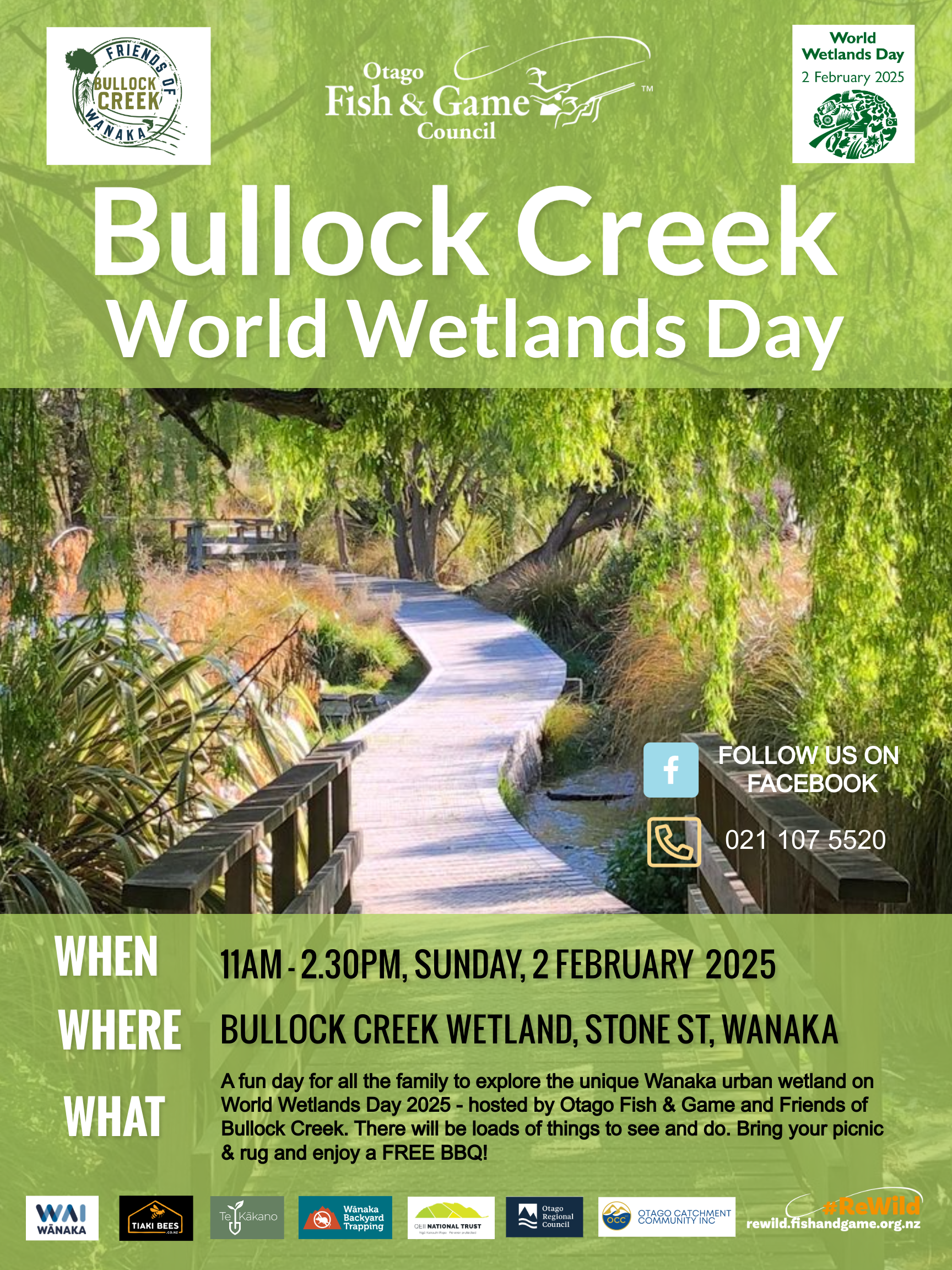
WORLD WETLANDS DAY - 2 FEBRUARY 2025

SAVE THE DATE!

A fun day for all the family to explore the unique Wanaka urban wetland on World Wetland Day 2025 - hosted by Otago Fish and Game and Friends of Bullock Creek. Bring your picnic & rug and enjoy a FREE BBQ. There will be lots to see and do in the Bullock Creek Wetlands :

  • see how Fish & Game find fish in Bullock Creek and practice casting with a fun fishing game,

  • discover the tiny creatures that live in Bullock Creek with Wai Wanaka and Otago Regional Council,

  • learn more about the NZ native plants being restored to the Wetlands with Te Kakano,

  • view the fascinating world of bees with Tiaki Bees, Wanaka,

  • meet the team from Wanaka Backyard Trapping and learn how to protect our native birds and lizards, and

  • have a chat with representatives from the QEII Trust and Otago Catchment Communities.

FOBC Trust
Habitat Restoration Takes a Village

Volunteers excited for the plant delivery from Te Kakano

Here at Friend of Bullock Creek, we understand that we couldn’t accomplish what we do without the generous help and support from the Wanaka Community at large. We always enjoy and greatly appreciate any opportunity to collaborate and work with any friends. Work at Bullock Creek has managed to unite a community and heal an ecosystem.

Recently, we recieved a generous delivery of plants from Te Kakano, another amazing local organization. They too rely on generous volunteer time. This fabulous collaboration will lead to native species: Kanuka, Kahikatea & Olearia hectorii - getting to grow up right at Bullock Creek. Here’s the instagram and facebook posts about it!

Olearia hectorii in particular is a very important inclusion! This native - also known as Deciduous Tree Daisy, is nationally endagered. Many Olearia are simply nearing the end of thier life and there are not enough young plants growing to replace them. Meanwhile sprouting plants struggle to establish themselves and are often outcompeted.

Getting to put a few Olearia Hectorii in the ground was valuable to say the least. Existing Olearia are important members of the ecosystem, offering homes to many bugs and other forms of life! At Bullock Creek these youngsters will have plenty of opportunity to grow strong and healthy - and will always have friends in those who spend time there.

To learn more about Oleria Hectorii - DOC does a great job at profiling this awesome plant in a video. And if you want an even deeper dive - check out this article when Olearia was plant of the month!

It is always a pleasure to work with Te Kakano to help an ecosystem out… I wonder what team up will be next…? If you’d like to get involved with either Te Kakano or FOBC - don’t hesitate!

Olearia Hectorii & its yellow flowers. Image from New Zealand Plant Conservation Network.

TEAMWORK AT BULLOCK CREEK

Captured during the joint stream assessment - volunteers are listening closely and eager to help!

Usually, our Thursday Working Bees are filled with lots of weeding, mulching, and tough labor! One Thursday the volunteers had a chance to take a break from the work to help out WAI & Otago Fish and Game with a Stream Assessment!

This joint stream assessment at Bullock Creek consisted of a few activities. Water Quality was tested through measuring the pH, turbidity, and nitrogen levels of the water. Also, some creature samples were found in the lake, which helps determine how healthy Bullock Creek is! This time around, baby brown & rainbow trout were found! Additionally, we determine some other creek health parameters including: plant types, sediment types, amount of rubbish, and more. Measuring and recording findings is extremely important so this knowledge is accessible.

WAI does a fantastic job at including citizens in thier science initiatives, and we were lucky to work with them and Otago Fish and Game to make this assessment happen. If you want to learn more about WAI’s “Get Your Feet Wet” project - visit their website! This project is the epitome of citizen science, and contributes to keeping our community informed, and most importantly, keeping our waterways clean! Check out WAI’s Event Calendar if you are interested in volunteering at an upcoming event.

Baby Trout found during stream assessment! Can you tell the difference between the Brown and Rainbow Trout?

Another Baby Trout… Which is which? Rainbow or Brown!?

FOBC Trust
Shed, Sweet Shed

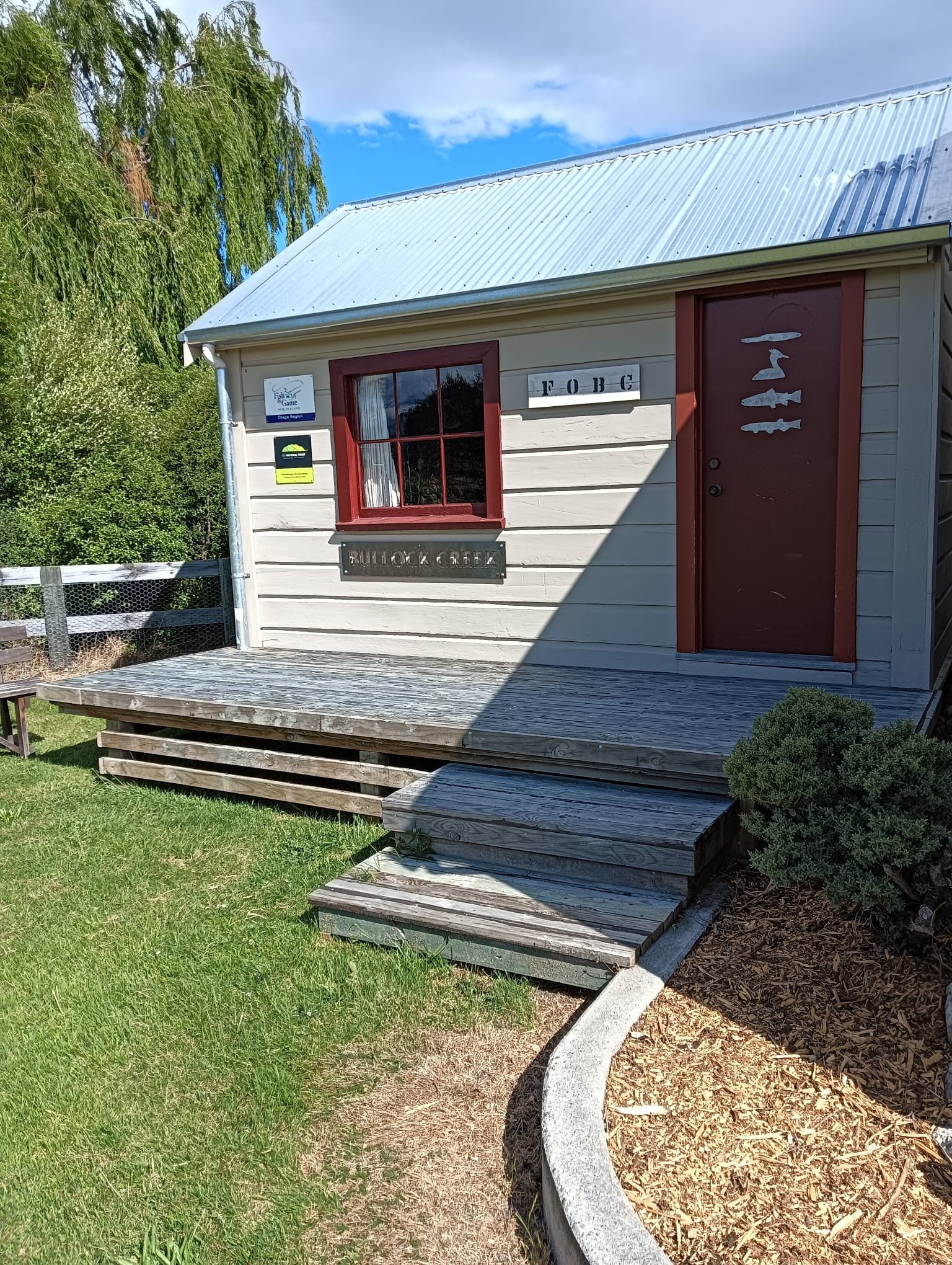
In addition to the bigger hut that is utilized for FOBC operations, now we have another little storage shed at the Wetlands! A huge Thank You to Roger Gardiner, Corrections Community Service workers, as well as the amiable permission of Otago Fish and Game Council. Lucky us! This little shed's purpose is to be used for storage with the plan to do some renovations on the bigger hut. Folks with FOBC are beyond grateful for this asset. Stay tuned for exciting updates!

FOBC’s newest addition - a little storage shed.

Our trusty bigger hut that will be renovated.

FOBC Trust